 SummaryAirport Rating **** Reception of locals ***** Cost: ££
Back in West Africa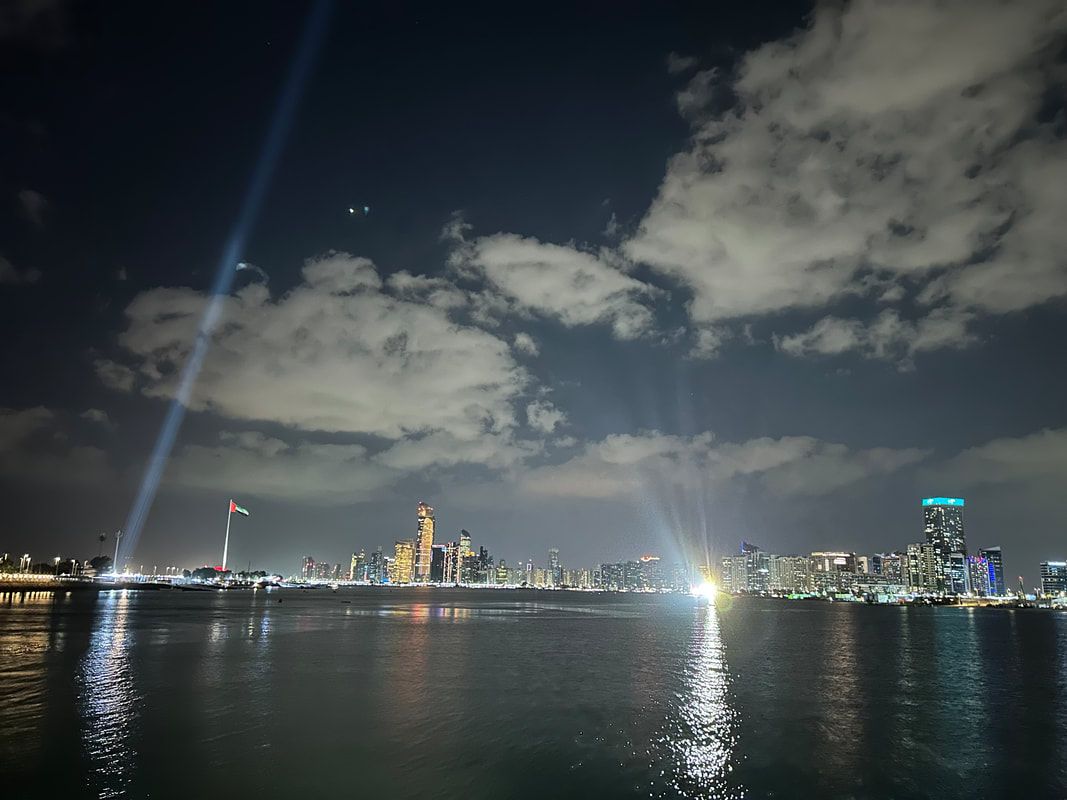 It has been a long time since I've been in West Africa. It was over 6 years ago when I visited Nigeria and spent some time in Lagos and Abuja (which you can read about here). Ghana, and Accra in particular, have been near the top of places that I've wanted to visit. We have a large Ghanaian population in the UK, and I only ever hear good things about the people, places, and culture of Ghana. Recently, I finally had the chance to spend 10 days in Accra and achieve that small dream. Ghana is similar in size to the United Kingdom but has about half the population (around 35 million people), but that still makes it one of the larger economies and population centres in West Africa. English is the official language, reflecting Ghana's colonial history, although more than 80 indigenous languages are spoken across the country. Among the most widely spoken are Akan, Ewe, Ga and Dagbani. The area that is now Ghana has been inhabited for thousands of years and was home to a number of powerful kingdoms and trading states long before European contact. Among the most influential was the Ashanti Empire, which emerged during the late seventeenth century in the forested interior. Based around Kumasi, the Ashanti developed a highly organised political system, an extensive military and sophisticated trading networks. Gold played a central role in the region's economy, and the area became known internationally for its mineral wealth. European involvement began during the fifteenth century when Portuguese traders established trading posts along the coast. Over the following centuries, the Dutch, Danish, Swedish, Brandenburgers and British all established forts and castles, many of which remain standing today. Initially these settlements focused on trade in gold, ivory and other goods. Over time, however, the Atlantic slave trade became the dominant commercial activity. Forts such as Cape Coast Castle and Elmina Castle became major departure points for enslaved Africans transported across the Atlantic. By the nineteenth century, Britain had become the dominant colonial power in the region. The coastal territory became known as the Gold Coast and was gradually expanded inland following a series of conflicts with the Ashanti Empire. The British bought with them new types of agriculture, including Coca which is now one of Ghana's most dominant exports. The Gold Coast became the first country in sub-Saharan Africa to achieve independence from colonial rule when it gained independence in 1957. Under the leadership of Kwame Nkrumah, the new nation adopted the name Ghana, referencing the medieval Ghana Empire that had existed much further north in West Africa. Ghana later became a republic in 1960. The decades following independence had periods of military rule, economic challenges and political instability. Since the early 1990s, however, Ghana has maintained a multi-party democratic system with regular elections and peaceful transfers of power. It is frequently regarded as one of the more politically stable countries in West Africa, supported by relatively strong democratic institutions and an active civil society. Ghana has a diverse geography that extends from coastal plains along the Atlantic Ocean to tropical rainforest in the south-west and savannah regions in the north. Lake Volta which was created following the construction of the Akosombo Dam during the 1960s is one of the world's largest artificial lakes. The country's climate is mostly tropical but rainfall varies considerably between regions. Southern Ghana experiences two rainy seasons each year, while the north generally has one. Temperatures are relatively consistent throughout the year, with coastal areas a little cooler and inland a little hotter. During my trip, even on the coast, I found it sweltering. Ghana is one of Africa's largest producers of gold and is also an important exporter of cocoa and crude oil. Banking, telecoms, retail, logistics and information technology have grown a lot over recent decades and there is some manufacturing too. Accra, which is Ghana's capital city, is on the country's south-eastern Atlantic coast and has a population of roughly five million people. During British colonial rule, Accra replaced Cape Coast as the colonial capital in 1877, largely because of its expanding infrastructure and strategic coastal location. Today, Accra is home to government ministries, financial institutions, multinational companies and diplomatic missions of other countries. Kotoka International Airport is Ghana's primary international airport and connects to countries around the world (including directly with the UK. The airport, which is very close to the city centre, is relatively modern and quite efficient. I had no troubles as a Sikh either getting into Ghana or getting out, and security and immigration staff seemed knowledgeable and respectful. Kwame Nkrumah Memorial Park Three things hit me straight away when getting into Accra, the heat, the crowds, and the traffic. Although not nearly as bad as nearby Lagos, all three are persistent through most of the day, only really subsiding during the late evenings. It's why I enjoyed the Kwame Nkrumah Memorial Park so much. Although it is a busy landmark, it's still much more breathable than the surrounding areas. Kwame Nkrumah was Ghana's first Prime Minister and first President. He was born in 1909 in the village of Nkroful in western Ghana, then part of the British Gold Coast colony, Nkrumah trained initially as a teacher before continuing his education abroad. He spent almost a decade studying in the United States, attending Lincoln University and the University of Pennsylvania, where he was exposed to political philosophy, economics and the writings of influential Black intellectuals including W. E. B. Du Bois (more on him later) and Marcus Garvey. He then moved to London, becoming involved with anti-colonial organisations and Pan-African political movements before returning to the Gold Coast in 1947. Initially serving as General Secretary of the United Gold Coast Convention, Nkrumah soon broke away to establish the Convention People's Party CPP in 1949 after disagreements over the pace of constitutional reform. His campaign adopted the slogan "Self-Government Now", arguing that independence should not be delayed through gradual constitutional negotiations. Following periods of imprisonment by the colonial authorities and successive electoral victories, Britain negotiated Ghana's independence, which came into effect in 1957. Three years later Ghana became a republic, with Nkrumah serving as its first president. Nkrumah believed that political independence alone would not guarantee long-term prosperity or security for newly independent African states. Instead, he advocated continental unity through political and economic cooperation, arguing that fragmented states would remain vulnerable to external influence. These ideas became central to the Pan-African movement, and Nkrumah played an important role in the establishment of the Organisation of African Unity in 1963, which later evolved into the African Union. At the same time, Nkrumah's presidency wasn't all sunshine and rainbows. While his government invested heavily in education, industrialisation and major infrastructure projects, including the Akosombo Dam and Lake Volta hydroelectric scheme, political opposition became increasingly restricted during the 1960s. Ghana eventually became a one-party state, with expanding presidential powers and limitations placed upon political dissent and press freedom. In February 1966, while Nkrumah was travelling overseas on a diplomatic mission, the Ghanaian military overthrew his government in a coup. He spent the remainder of his life in exile, primarily in Guinea, before dying in Romania in 1972 while receiving medical treatment. His remains were later returned to Ghana and eventually interred within the present memorial. The Memorial Park and Mausoleum is built where Ghana declared its independence from British colonial rule on 6 March 1957. You have to buy a ticket to get in, but once you're in you can see a public park, some bars and restaurants, a museum, the mausoleum of Nkrumah, and an education centre. The centrepiece of the memorial is the mausoleum, covered almost entirely in white Italian marble. Its shape resembles an inverted sword which in Akan tradition represents peace following conflict. The mausoleum is in the middle of shallow reflecting pools and landscaped gardens. Inside the mausoleum are the marble tombs of Kwame Nkrumah and his wife, Fathia Nkrumah. Behind the mausoleum is the museum, which tells the story of Nkrumah's life and Ghana's struggle for independence. The collection includes family photographs, personal correspondence, official documents, clothing, books, speeches and numerous gifts presented by foreign governments during state visits. A huge shout out to the security guard who asked if I'd visited before, and when I said no, proceeded to give me a 20–30-minute tour going through each exhibition in detail. It's a small museum (basically a rectangular room) but it does a good job telling Nkrumah's story and I thought it was well put together. Outside there is a large statue of the famous man and this is where tourists, locals, and schoolchildren were lining up to take photos, I even got a request from a couple of locals to jump into a photo with them. It's a nice place to visit for sure. Black Star Gate & Independence Square On the other side of experiences was visiting Independence Square. As soon as I got there, I was asked by a small group of men to buy bracelets, and no matter where I walked, they followed. It was frustrating but they finally got the message after several minutes and walked away. Independence Square was built to commemorate Ghana's independence from British colonial rule and continues to host many of the country's most important national events. Independence Square describes the large ceremonial parade ground itself, while Black Star Square refers more broadly to the entire complex, including the parade grounds, the Independence Arch and the Black Star Gate which sits on a nearby roundabout. Together they form one of the largest public squares in Africa, and it feels huge and expansive. The square overlooks the Gulf of Guinea and wide ceremonial roads approach the site, allowing large military processions and official motorcades to enter the square during national celebrations. The surrounding open spaces were deliberately designed for large crowds while providing unobstructed views of the main monuments which is why it feels so open. The most recognisable structure within the complex is the Black Star Gate, an imposing ceremonial arch that has become one of Ghana's national symbols. Above the arch is a five-pointed black star (hence the name). The star is at the centre of Ghana's national flag and symbolises African freedom, independence and unity. Nearby is the Independence Arch, and then there is the parade ground itself which can accommodate more than 30,000 people during official events, although significantly larger crowds often gather around the surrounding roads during major national celebrations. When I got there, there was hardly anyone (other than bracelet guys) and so it just felt a little... flat. Since its completion, Black Star Square has hosted many of Ghana's most important national events and annual ceremonies include military parades, cultural performances, presidential speeches and flag-raising ceremonies attended by government officials, diplomats and members of the public. The square also hosts Republic Day commemorations, state funerals, presidential inaugurations, official receptions for visiting heads of state and other significant national occasions. Makola Market One place not lacking people or energy is Makola Market. It's one of the largest markets in the world, and I've rarely experienced anything on its size and scale in all of my travels. The modern market was established in 1924 during British colonial rule. At the time, Accra was expanding rapidly as the administrative capital of the Gold Coast, creating demand for a larger and more organised commercial centre. Makola was developed to replace the earlier Accra Market and quickly became the city's principal wholesale and retail marketplace. Over the following decades, the market grew alongside the capital, attracting traders from across Ghana and neighbouring countries. As Accra expanded, the market evolved into the country's most important trading hub, supplying goods to businesses, retailers and consumers throughout southern Ghana. Throughout much of the twentieth century, Makola became closely associated with the economic influence of Ghana's market women. Thousands of female traders, often referred to as market queens, built successful businesses selling food, textiles, household goods and imported merchandise. Many controlled extensive supply networks that connected farmers, manufacturers, wholesalers and retailers across the country. Even during my visit, most of the market vendors were all women. It's easier not to think of Makola as a single market but rather an entire commercial district. There are rows of streets that are lined with stalls, shops and warehouses specialising in different categories of goods. Some areas focus primarily on food, while others specialise in textiles, electronics, beauty products, hardware or household supplies. You can buy pretty much anything from there. Fresh fruit and vegetables arrive daily from farming regions across Ghana. Fish, both fresh and smoked, occupies another large section of the market, and the smell is overwhelming. It's one of the few times (along with Hong Kong's night markets) where I nearly gagged. I still don't get how it all works. Fish, covered in flies, being bought by people., but it works and I won't judge. There are also locally produced oils and imported goods from across Africa, Europe and Asia. There are sections for household goods like cooking equipment, cleaning products, tools and building materials. It's mental! And that's without even covering the clothing and textiles. In the daytime heat, with the crowds, smells, sights, it is easy to get overwhelmed especially as you go through the narrow mazes in the busiest parts of the market, but it is an experience I will think about forever. It's on a scale that I've rarely seen and is definitely worth a visit. Oxford Street Oxford Street in London is one of my least favourite parts of the city. I lived in London almost seven years and I would avoid it as much as possible because it's just one giant shopping street that largely caters for tourists and is a nice place for locals to try their scams and robberies. I've come to associate Oxford Street with my least favourite things about the city. So, imagine my surprise when I learned that one of the main thoroughfares and shopping districts in Accra is also called Oxford street. In fact it is the best-known commercial street in Accra and one of the city's busiest urban districts. The street runs through the heart of Osu with is one of the oldest neighbourhoods in Accra. Over the years, Oxford Street (Accra) has developed into one of Ghana's main centres for shopping, dining, entertainment and nightlife. The street itself forms part of Cantonments Road, although almost everyone refers to this section simply as Oxford Street. The name is unofficial and does not appear on many historical maps of Accra. It emerged through popular usage during the late twentieth century, inspired by London's Oxford Street and intended to reflect the area's growing importance as a commercial destination. Over time, the name became so widely accepted that it is now used by businesses, visitors and residents alike, despite Cantonments Road remaining the official road name. Oxford Street is just under a couple of miles long and it a traffic heavy part. I was dropped off and decided to walk different sections of it. Other than vendors beckoning you into their stalls, it didn't feel at all unsafe, nor was it too pushy. Unlike many shopping districts that are dominated by enclosed malls, Oxford Street has developed organically over several decades. Ground-floor retail units occupy almost every available building, while newer multi-storey commercial buildings have been constructed alongside older shops and residential properties. There are tons of street vendors with little hut like stores that sell knock-off goods as well as more beautiful local artwork and crafts. But you also have the larger shopping centres, and restaurants from all around the world (I noticed quite a few Turkish ones). Oxford Street is also well known for its nightlife. During the evening, bars, lounges, live music venues and nightclubs bring people together from around the world. You can hear and see live music, including highlife, Afrobeats and contemporary Ghanaian performances, everywhere and rooftop bars and entertainment venues have become increasingly common. A word on nightlife, Accra is incredible. You have everything for all tastes, and it is genuinely one of the better cities, not just in Africa, but the world. I genuinely, sincerely mean that. I absolutely loved the energy and creativity in this city. W.E.B. Dubois Centre Slightly out of the main city, the W.E.B. Du Bois Memorial Centre for Pan-African Culture is one of Ghana's most important historical and intellectual institutions. The centre preserves the former home, personal library and final resting place of Dr William Edward Burghardt Du Bois, the African American scholar, sociologist, historian and civil rights activist who spent the final years of his life in Ghana. Established in 1985, the centre is both a museum and research institution dedicated to Pan-African history, education and cultural exchange. W.E.B. Du Bois was born in the US in 1868 and became one of the most influential Black intellectuals of the twentieth century. He was the first African American to earn a doctorate from Harvard University, receiving his PhD in 1895. His academic work transformed the study of race, history and sociology in the United States, while his political activism placed him at the forefront of the struggle for civil rights. Du Bois believed that racial equality could only be achieved through education, political organisation and legal reform. In 1905 he helped establish the Niagara Movement, which campaigned against racial segregation and discrimination. Four years later he became one of the founding members of the National Association for the Advancement of Colored People, one of the most influential civil rights organisations in American history. Alongside his work in the United States, Du Bois became increasingly interested in Africa and the global African diaspora. He emerged as one of the leading advocates of Pan-Africanism, the belief that people of African descent shared common historical experiences and should cooperate politically, economically and culturally. Between 1919 and 1945 he helped organise a series of Pan-African Congresses that brought together political leaders, academics and activists from Africa, Europe, the Caribbean and the Americas. These meetings encouraged cooperation between anti-colonial movements at a time when much of Africa remained under European rule. Many future African independence leaders were influenced directly or indirectly by Du Bois's ideas, including Kwame Nkrumah. The relationship between Du Bois and Nkrumah ultimately led to the establishment of the centre in Accra. The two men first met during the Fifth Pan-African Congress in Manchester in 1945, where Nkrumah emerged as one of the leading voices calling for immediate African independence. After Ghana gained independence in 1957, Nkrumah invited Du Bois to move permanently to Ghana and oversee the ambitious Encyclopaedia Africana project, which aimed to produce a comprehensive scholarly reference work documenting African history, cultures and achievements from an African perspective. Du Bois moved to Accra in 1961 at the age of ninety-three and later became a Ghanaian citizen. Du Bois spent the final years of his life living in a relatively small bungalow in the city. He died in city in 1963. Following his death, Du Bois was initially buried elsewhere in Accra before his remains were transferred to his former residence. In 1985, the Government of Ghana formally established the W.E.B. Du Bois Memorial Centre for Pan-African Culture. During my visit, the centre was going through a large refurbishment which meant a lot of the areas of interest were under construction or otherwise closed off. I saw a short film on the life of Du Bois, the centre, and the aim of the refurbishment. I saw his old bungalow of the outside, exhibitions that included some famous photographs, but the main part was the mausoleum with the remains of the great man. To consider what he achieved and what he saw in life is astonishing and I hope to return to Accra one day when the new centre is completed. Jamestown Now if you're feeling very adventurous, then Jamestown is worth a visit. Jamestown is one of the oldest districts in Accra and it developed around one of several European forts (Fort James) established during the colonial era and has remained an important fishing and commercial community for more than three centuries. Jamestown takes its name from Fort James. The settlement gradually expanded around the fort as traders, fishermen, labourers and merchants established homes nearby. Over time, Jamestown developed alongside neighbouring European settlements, including Usshertown, which centred on the Dutch-built Ussher Fort, and Christiansborg, where the Danish established Christiansborg Castle. These separate colonial settlements eventually merged through urban growth to form the foundations of modern Accra. After being a trading post, it was later home of a prison during the colonial period. The fort remained in use well into the twentieth century before eventually being converted into a protected historical monument. Although access to parts of the structure has varied over the years because of restoration work and conservation efforts, it is one of the most important surviving examples of British colonial military architecture in Ghana. Along with other forts and castles along the Ghanaian coastline, Fort James forms part of the UNESCO World Heritage Site recognising the surviving European trading forts of West Africa. Another of Jamestown's most recognisable landmarks is the Jamestown Lighthouse. The original lighthouse was constructed by the British in 1871 to assist ships navigating the coastline approaching Accra. As maritime trade expanded, the need for a taller and more visible structure became apparent. In the 1930s, the original lighthouse was replaced by the current white cylindrical tower, which stands approximately 28 metres high. Unlike many of Accra's newer districts, Jamestown developed organically over several centuries. Driving through, I saw some beautiful architecture and a very cool but slightly rundown and dangerous vibe. Narrow streets, densely packed residential buildings and colonial-era architecture reflect patterns of urban growth that occurred long before modern planning regulations. Many buildings date from the late nineteenth and early twentieth centuries, combining European colonial architectural styles with local construction methods. Many of the historic buildings have deteriorated through age and limited maintenance but they still look beautiful. That being said, I wouldn't advise walking through this area alone or without a local, it is one of the more dangerous looking neighbourhoods I've been to during my travels. Gurdwaras in Ghana The biggest surprise of my visit to Accra was easily the large Sikh community. If my travels around the world have taught me anything, it's that we get everywhere. But West Africa? And Ghana specifically? While there is colonial links, this is a part of the world known to have diseases that locals have spent millennia getting accustomed to. Yet there I was, in Accra, on the first day, and visiting a very small Gurdwara (pic below) in the middle of the city. The Gurdwara is next to commercial units and without the Nishaan Sahib I might have missed it. I visited on a Sunday and the Darbar Sahib was packed full of people, men, women, and children. Often, where there is immigration, it is mostly men, but these were full families. The entrance to the Gurdwara is through a small alley-lake gate before you reach the top. There you can find a place to leave your shoes and small place for langar, before you walk into the small but busy darbar hall. The kirtan being played was beautiful and I honestly couldn't believe I was in the middle of Accra. Just as I was leaving, the Giani called me over, asked me if I was travelling, and then told me about a larger Gurdwara on the outskirts of the city, and recommended that I should visit. A few days later, on Guru Arjan Dev Ji's shaheedi, I visited Sahib's Gurdwara, a new Gurdwara located not too far from the airport. And wow. I couldn't believe what I was seeing. Rising above its residential surroundings, the Gurdwara can be seen from several streets away. The building itself is new, and as modern and beautiful as any Gurdwara I have seen in any country in the world. You enter through a large glass frontage with a place to wash your hands and feet. The langar hall is huge with large digital screens showing the divaans happening upstairs. By the way, the Gurdwara has multiple stories so there is a lift inside. Each floor has a different theme: the ground floor is called "ego therapy" where you can do service of others. I took the beautiful staircase and one the first floor above the ground floor is a dedicated children's play area, a cafe and chillout zone, meditation rooms, and a library. This floor is called "self discovery". The next floor is where the main darbar hall is. In addition to the main hall, there are lounges in connected rooms, including the shaheedi lounge which is decorated with motifs of Sikhs that died for their faith. The darbar hall is large, modern and beautiful beyond words. One thing really stood out. The golak, which is available in everywhere Gurdwara around the world to place your donation is closed and has a sign "no cash here please, the Guru is pleased with the surrender of your ego". Wow. A Gurdwara that actively says no to money and donations. By the way, this floor is called "Be the Saint". There is one more floor to the rear called "Train the Solider" which is where the gym is located. I can't begin to tell you how impressed I was at this Gurdwara. Everything about is so forward looking. It is where Gurdwaras should be going. They work with their local community and treat the Gurdwara not as a ritual, but as a place to train the body and the soul. For me, this is one of the most incredible Gurdwaras I have ever seen in my life. Would I recommend visiting Accra? In a heartbeat. It lived up to my expectations and then some. Yes, there is wealth inequality that is very visible, as there is in other countries, but it is a young vibrant country with a lot going for it. I just loved the whole vibe of the city. There are a few landmarks, but if you focus just on famous places, I think you miss the essence of Accra. This is a city where things are happening, young people are building something special, there is a real buzz. The nightlife is extraordinary, the food is delicious, and for Sikhs, there is a Gurdwara here that is as stunning as any modern Gurdwara you'll see in your life. Comments are closed.
|
AuthorBritish Sikh, born in the Midlands, based in London, travelling the world seeing new cultures. 
Categories
All
|
 RSS Feed